Choose layout
Choose font
Size
Print options
straightleg(1)
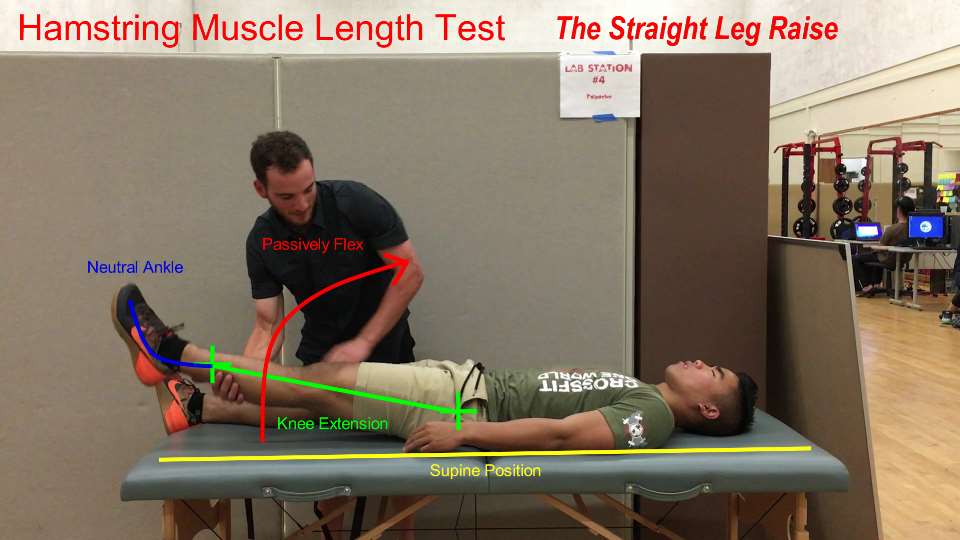
Patient Position
The patient should assume a supine position on the table. The lower extremity that will not be tested is permitted to rest on the supporting surface. The position of the lower extremity that is to be tested should then be one of knee extension and a neutral ankle.
Consideration: If the patient displays any adaptive shortening of the one joint hip flexors, a small pillow must be placed under the knee of the non-tested lower extremity to prevent extension of the lumbar spine.
Consideration: If the patient displays any adaptive shortening of the one joint hip flexors, a small pillow must be placed under the knee of the non-tested lower extremity to prevent extension of the lumbar spine.
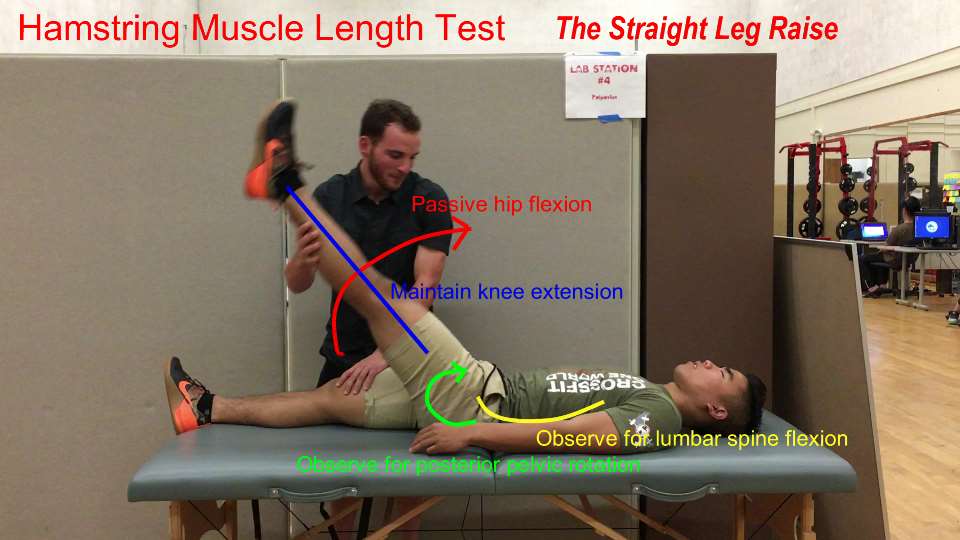
2
The patient does not actively contract any muscles during the test. The tester passively flexes the patients hip on the tested side while maintaining the knee in extension.
Consideration: The tester must make sure the knee of the tested lower extremity does not move into hyperextension, the pelvis does not start to rotate posterioly, or the lumbar spine start to flex during the test.
Consideration: The tester must make sure the knee of the tested lower extremity does not move into hyperextension, the pelvis does not start to rotate posterioly, or the lumbar spine start to flex during the test.
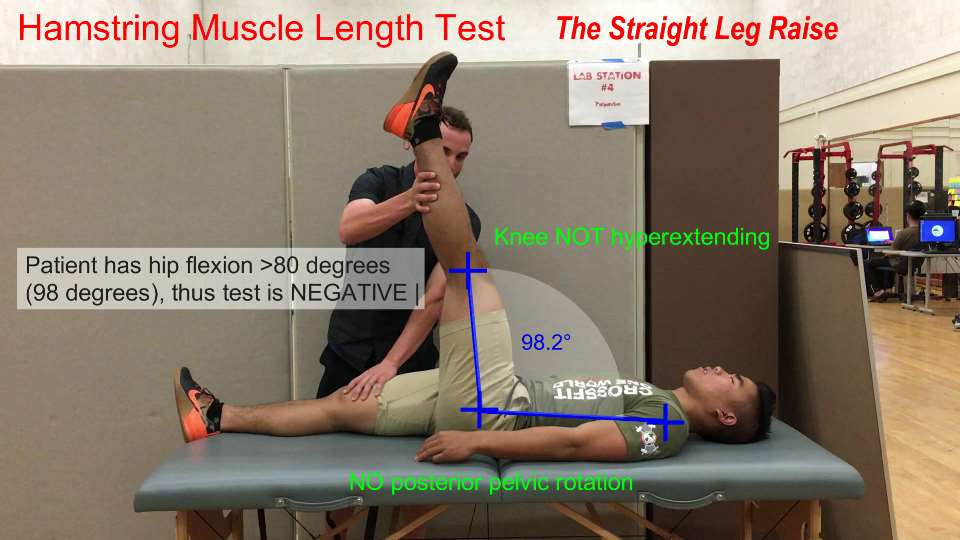
Determination of "normal" Length
"Normal" length of the hamstring muscles should allow the pateint to obtain a position of 80 degrees of hip flexion without the knee hyperextending or the pelvis rotating posteriorly.

Cal State East Bay TV
powered by
dartfish.tv
Straight Leg Muscle Test (ExtraCredit)
By Sean Allen, Amandeep Aujla, and Renn Sapanlay.