レイアウトの選択
フォントの選択
フォントサイズ
印刷オプション
Biomechanical Concept Video 3

1
During this first key position, the athlete can be seen first in the depth of her squat, in preparation to push herself onto the beam. The athlete has a parallel hips and her gaze is aimed forward at her desired target.
Frontal View.
Frontal View.
2
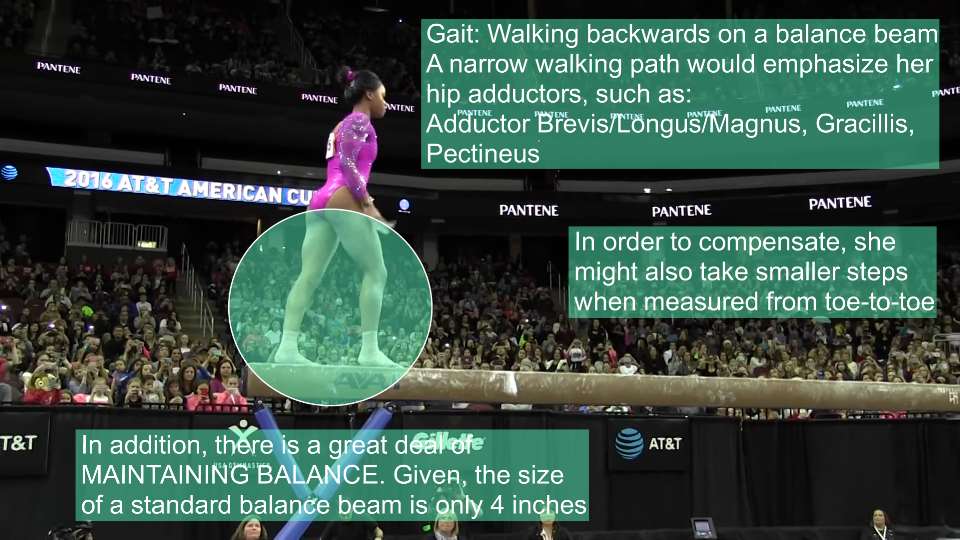
Walking backward on a balance beam requires a very specific gait while maintaining balance. The athlete must step specifically behind the first foot. It is also noted that she steps down on her forefoot first then places her heel down. Since a balance beam is such a narrow walking path, this would emphasize use of her hip adductors.
3
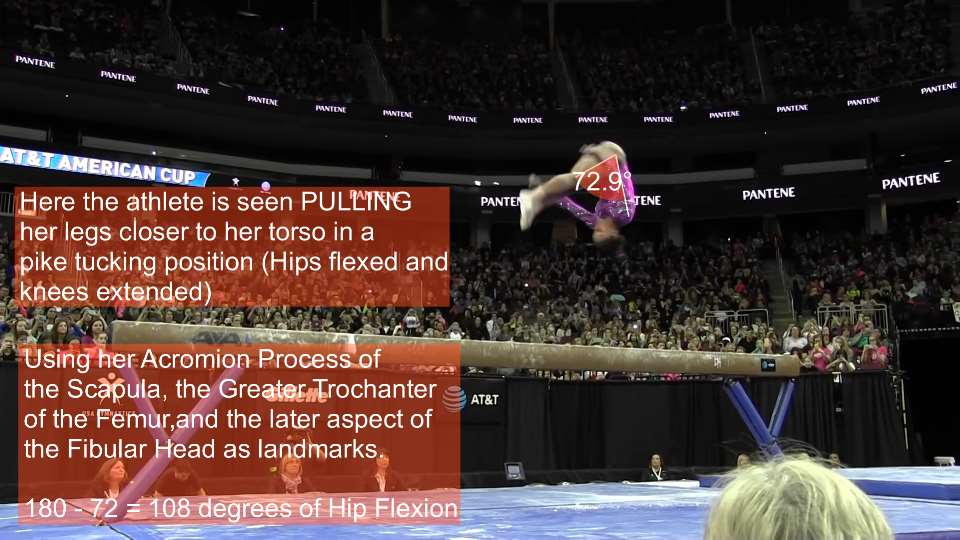
During this movement, the athlete can be seen pulling her legs closer to her torso. This requires work from both the biceps, pectoralis major and also the hip flexor muscle group.
4
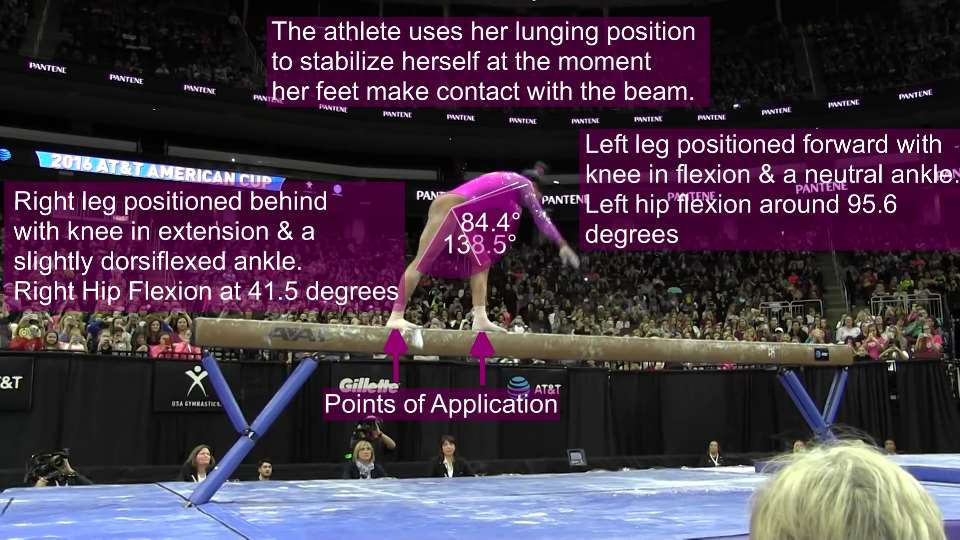
The fundamental movement involved here is a lunging movement. This movement stabilizes the athlete after her center of gravity is changing throughout the back layout.
5
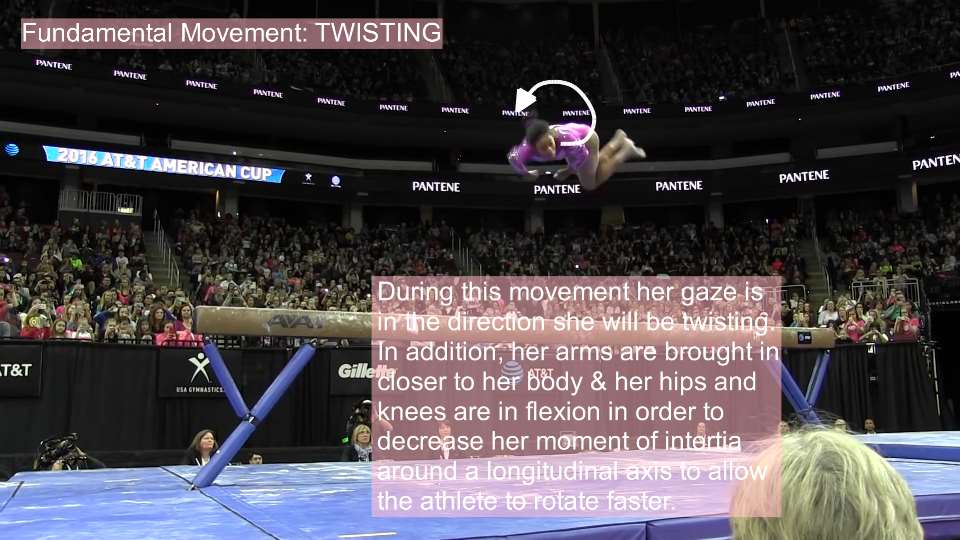
This was very interesting because this twisting motion (axial rotation) can be viewed in a transverse plane.
6
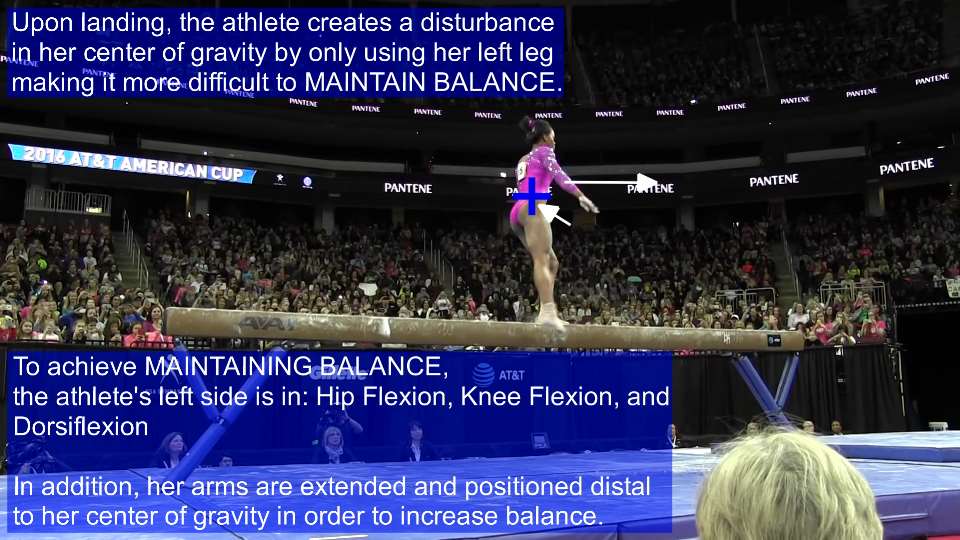
During this movement, the athlete can be seen maintaining her balance as she lands on her left leg. As her left leg makes contact with the ground, her center of gravity is shifted and creates a more difficult environment to maintain her balance.
7
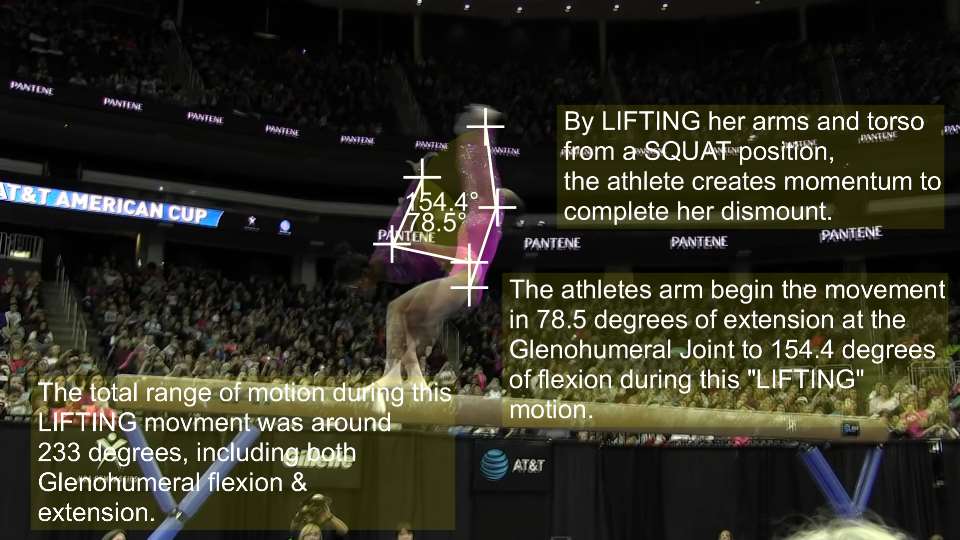
Using the styloid process of the ulna, the acromion process of the scapula, and the greater trochanter, the range of motion during this lifting movement was around 232.9 degrees!
8
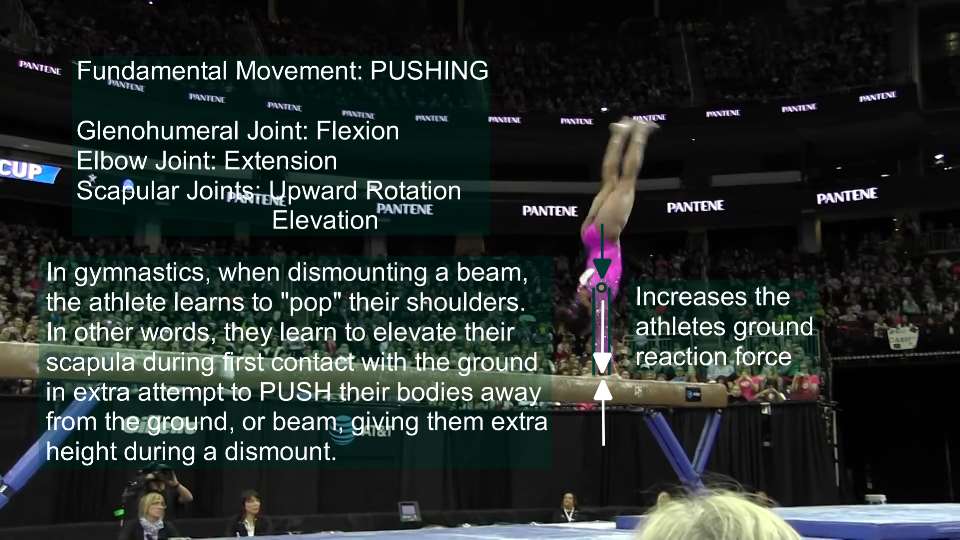
In this last key position, the fundamental movement being emphasized is pushing. This version of the movement really emphasizes use of the scapular upward rotators such as the trapezius and the serratus anterior, in addition to the deltoid muscle being utilized.

Cal State East Bay TV
powered by
dartfish.tv
Video 3: The 6 Fundamental Movements as Means of Analysis
This video uses the 6 Fundamental Patterns of Movement: Squat/Lift, Lunge, Push/Pull, Gait, Twist, and Maintaining Balance, and applies them as means for a gymnastics beam routine analysis.
In general, these concepts are very qualitative. So in order to add another layer of analysis, I further explained the intentions & goals of each fundamental movement and how it applied to the routine, as used the text, marker, spline, angle, oval/circle, and silhouette tool. In addition, I was also able to blend different positions together to further explain the concept.
In general, these concepts are very qualitative. So in order to add another layer of analysis, I further explained the intentions & goals of each fundamental movement and how it applied to the routine, as used the text, marker, spline, angle, oval/circle, and silhouette tool. In addition, I was also able to blend different positions together to further explain the concept.