Choose layout
Choose font
Size
Print options
Novak Djokovic Return of Serve

GRIP
The first parameter for the return of serve is the grip. The grip used to return serve is based on personal preference and a number of factors. Some of the determining factors include if the returner is receiving a first or second serve, if the returner has a one or two handed backhand and what the tactical intention of the return.
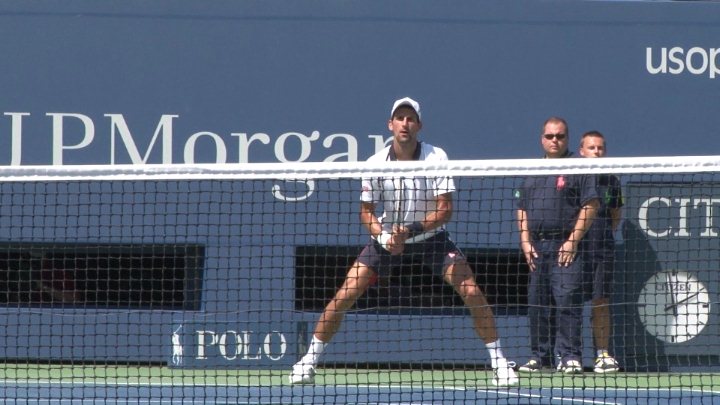
RETURN POSITION AND STANCE
The second parameter for the return of serve is the return position and stance. The court position the returner strikes the ball from and the stance they use are based on personal preference and other factors such as speed/spin of the incoming serve and the tactical intention of the return. In this example Novak is returning a second serve so he is positioned just behind the baseline and will take a semi-open stance slightly inside the baseline.

READY POSITION
The third parameter for the return of serve is the ready position. Notice that Novak is in an athletic stance with his feet approximately twice his shoulder width apart. His wide stance and lower center of gravity provide the base for his explosive reaction to the serve.

SPLIT STEP
The fourth parameter for the return of serve is the timing of the split step. The split step must be appropriately timed with the contact of the serve to allow the player to find the correct position and execute the return.
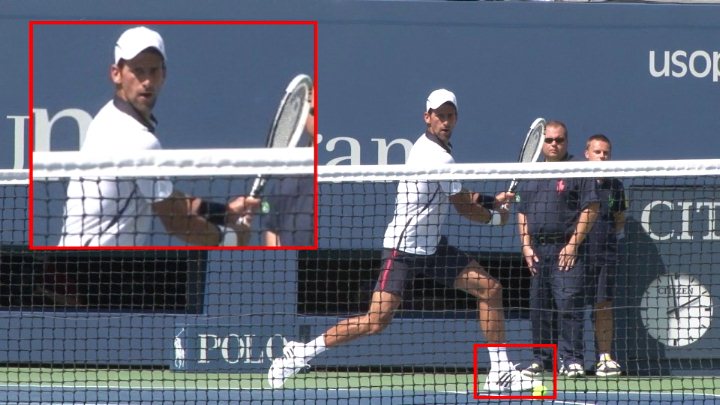
STEP OUT AND UNIT TURN
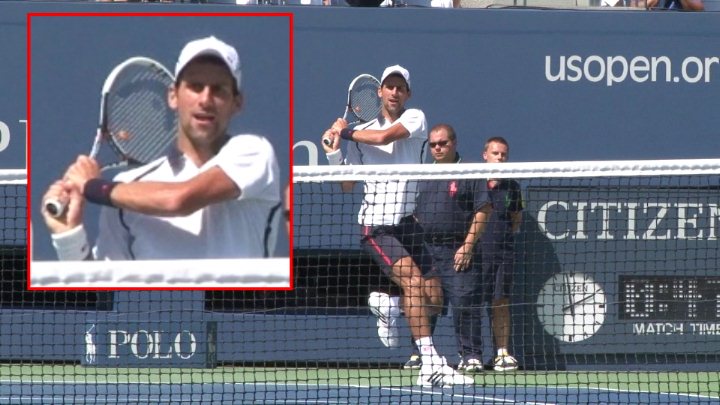
The fifth parameter for the return of serve is the step-out and unit-turn. The step out with the outside foot (in this case the left foot) occurs just after landing from the split step and is synchronized with the unit-turn (taking the racquet back by turning the shoulders). A quick unit-turn allows the player to reduce the size of the backswing and engage the core to produce power and increase efficiency.
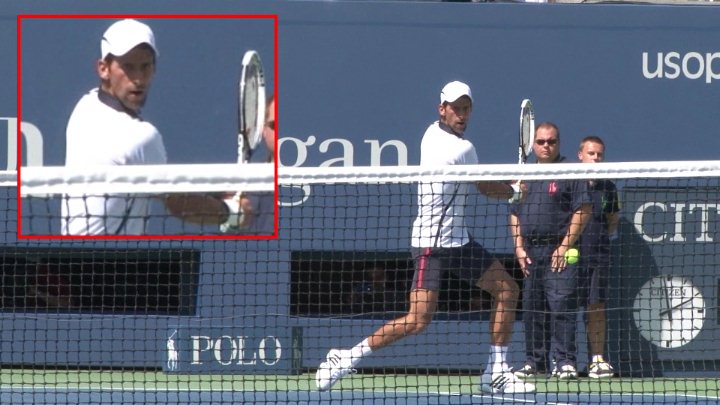
BACKSWING
The sixth parameter for the return of serve is the backswing. The backswing is dependent on how much time the returner has as well as the court position and tactical intention. Novak is taking this return on the rise while standing close to the baseline so he can use the pace of his opponent with a small backswing. Someone like Nadal especially when returning on clay will choose to stand much further back will use a bigger swing to produce a high and heavy return.
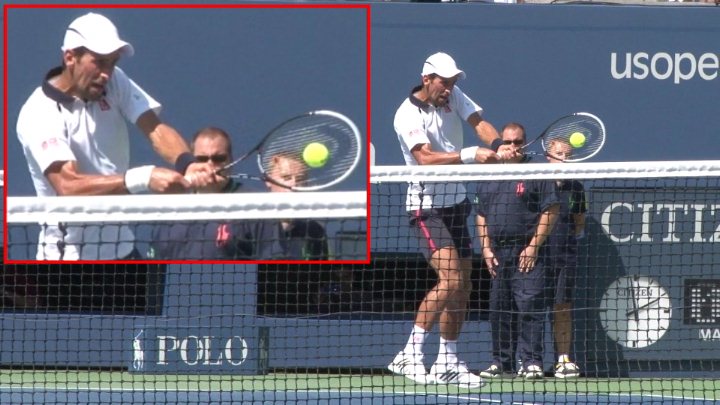
CONTACT
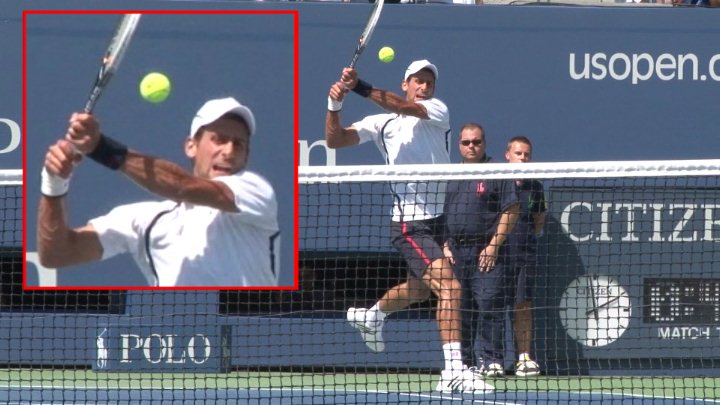
The seventh parameter for the return of serve is contact. The point of contact is based on the grip the player is using and the swing path and type of return being produced. Novak is taking this ball on the rise and driving the return so his point of contact is right at shoulder height.
EXTENSION
The eighth parameter for the return of serve is extension. In this example Novak has full extension with his non-dominant hand out to the target because he is trying to achieve depth on the return. The extension is a result of the swing path and intended target. For example, if the opponent was serving and volleying and Novak needed to produce a short angle reply his extension and finish would be affected.
FINISH
The ninth parameter for the return of serve is the finish. Again the finish is a result of the swing path and intended target. Since Novak is trying to achieve depth on the return he has a classic follow through over the shoulder.

USTA
powered by
dartfish.tv
Novak Djokovic Return of Serve
Novak Djokovic is among the greatest returners in the history of the game. This video points out the parameters of the return for the USTAPD Teaching and Coaching Philosophy. To print a copy of the parameters and key positions click the printer button.
Player Name -
Novak Djokovic
Stroke -
Return of Serve