Choose layout
Choose font
Size
Print options
Playing One Shot Ahead
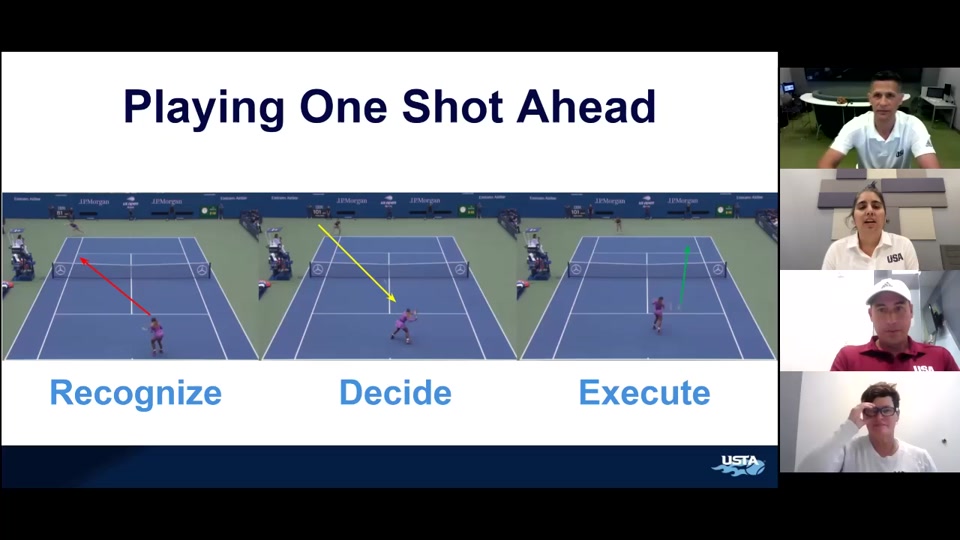
Playing One Shot Ahead
National Coaching Staff Lori Riffice, Jose Caballero and David Ramos define and give examples of what playing one shot ahead means, discuss the importance of player identity, and how to design drills and practices to improve on this concept

David A. Ramos - USTA Director, Coaching Education & Performance Analytics
David A. Ramos is a USPTA/PTR, P1 Professional with 25 years of diverse professional experience. He is currently a Director of Coaching Education and Analytics at the USTA Player Development National Training Center in Orlando Florida.
Lori Riffice - USTA National Coach, Player ID & Development
Lori has been a National Coach for 6 years for Player Development and is focused on the 13 and Under Girls. She is also the parent of Sam Riffice who plays tennis for University of Florida and is ranked #8 in the nation.
Jose Caballero - USTA Men's National Coach
Jose has been a national coach for 4 years and is focused on the Boys 14 and Under. Previous to becoming a National Coach he was in Coaching Education and ran his own Jr. Academy in Boca Raton.
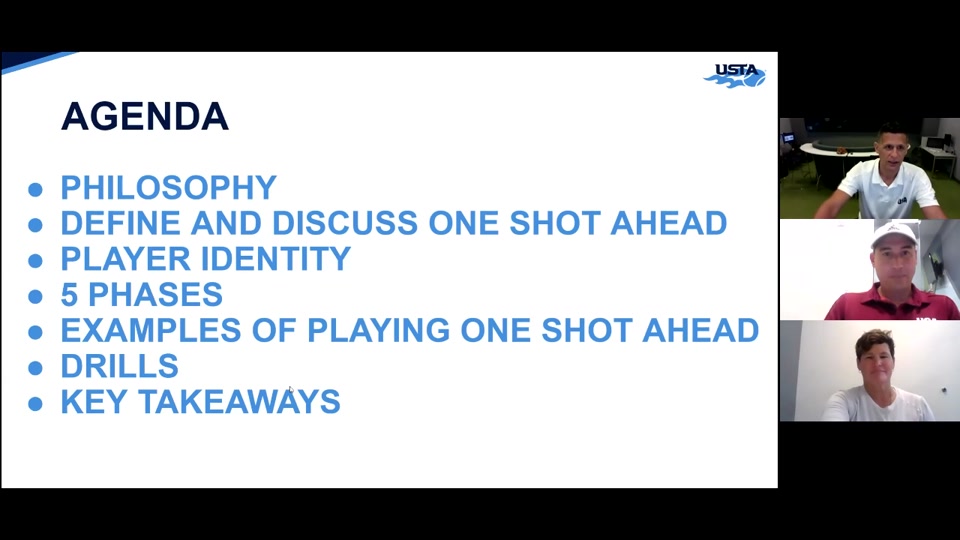
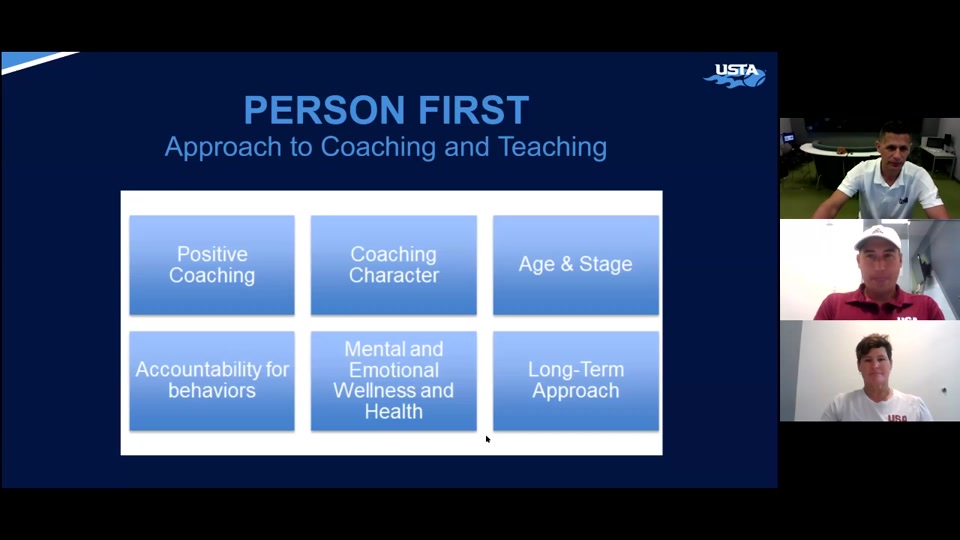
Person First Approach
When we talk about the USTA Player Development Teaching and Coaching Philosophy we must first discuss our adaptation of a player centered approach.
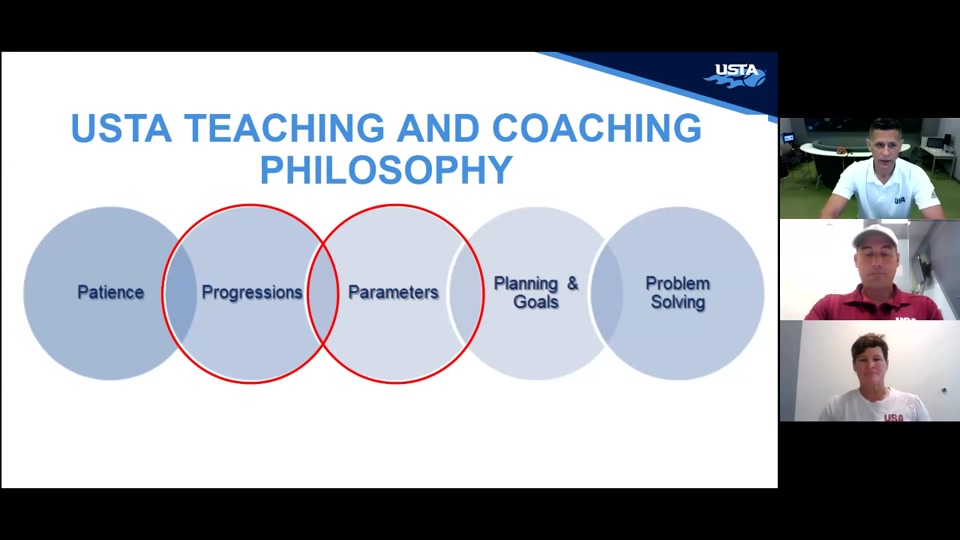
The USTAPD Teaching and Coaching Philosophy
The USTAPD Teaching and Coaching Philosophy is the framework for how we teach and coach players.There are 5 tenets to the USTAPD Teaching and Coaching Philosophy and today we are going to talk about Playing Progressions and Tactical Parameters.
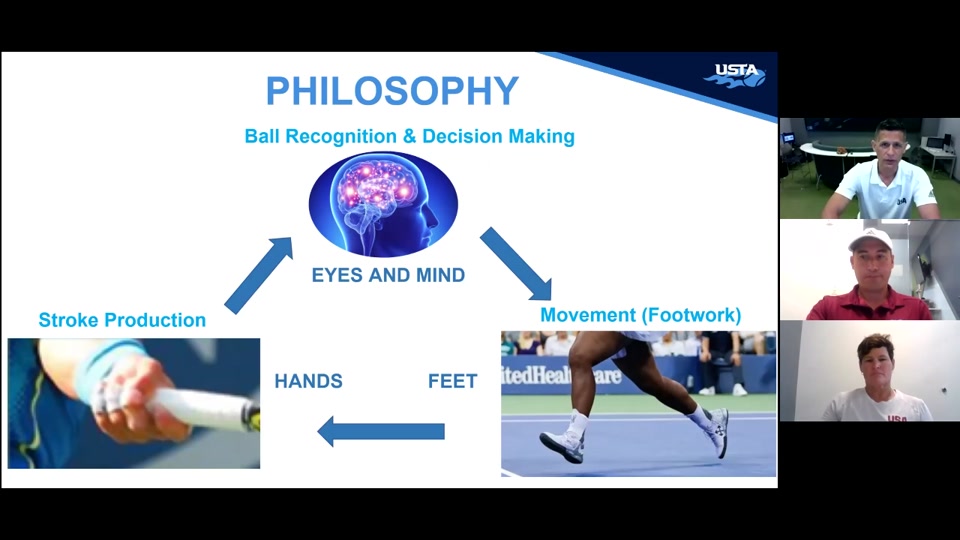
The USTAPD Teaching and Coaching Philosophy
The USTA Teaching and Coaching Philosophy is based on the fundamental terms of how the game is played, first with the eyes and mind, secondly with the feet and lastly with the hands. Eyes and Mind refers to ball recognition and problem solving. Feet refers to footwork and movement and hands refers to grips and swing paths.
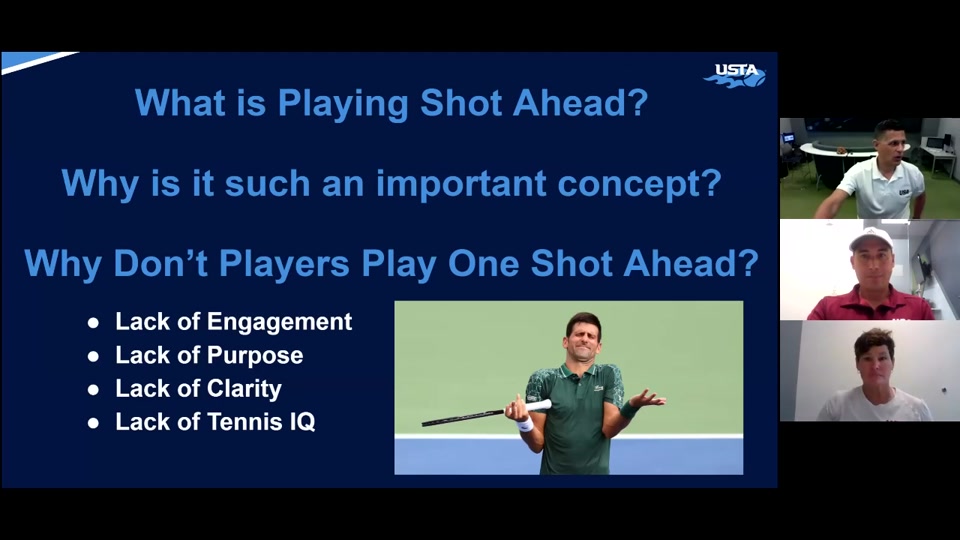
What is Playing Shot Ahead?
Coach Lori talks through what playing a shot ahead means and why its so important as well as answering some questions about why players dont play one shot ahead.
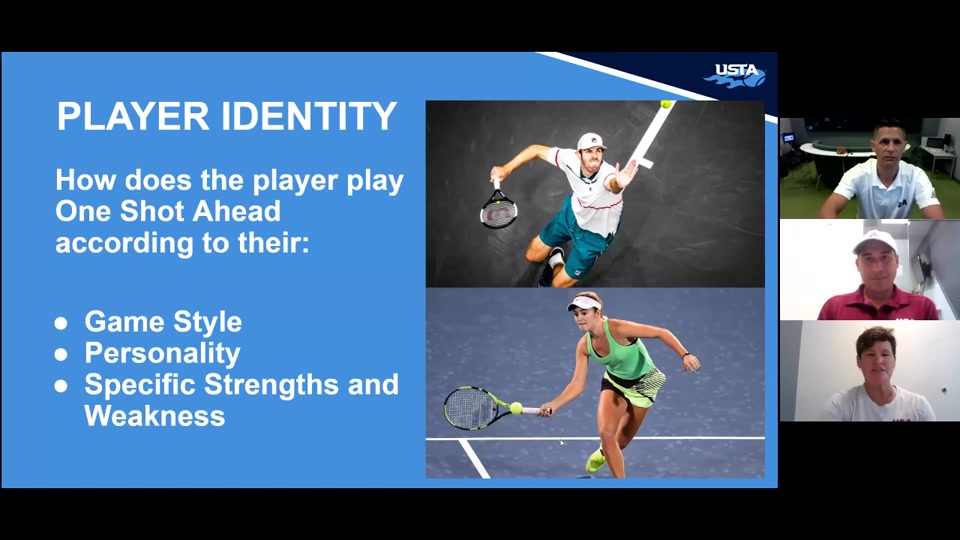
Player Identity
Once players understand their gamestyle and key patterns of play
- Practice will make more sense
- They can build their game for the future
- Choose an appropriate player to model their game after
Opelka Case Study:
- Taller player, less mobile, massive serve, plays more points in the 1-4 rally length
- Playing one shot ahead for him is:
- Focused on serving to locations where he can get forehands as the serve +1
- 2nd serve return to win points outright or get a forehand to dictate play
Bellis Case Study:
- Shorter player, very mobile, no huge weapons so must earn points and use patterns
- Playing one shot ahead for her is:
- Using accurate placements to gain an advantage
- Using outstanding recognition to take time away with court position
- Using variety of spin, trajectory and angles
- Practice will make more sense
- They can build their game for the future
- Choose an appropriate player to model their game after
Opelka Case Study:
- Taller player, less mobile, massive serve, plays more points in the 1-4 rally length
- Playing one shot ahead for him is:
- Focused on serving to locations where he can get forehands as the serve +1
- 2nd serve return to win points outright or get a forehand to dictate play
Bellis Case Study:
- Shorter player, very mobile, no huge weapons so must earn points and use patterns
- Playing one shot ahead for her is:
- Using accurate placements to gain an advantage
- Using outstanding recognition to take time away with court position
- Using variety of spin, trajectory and angles
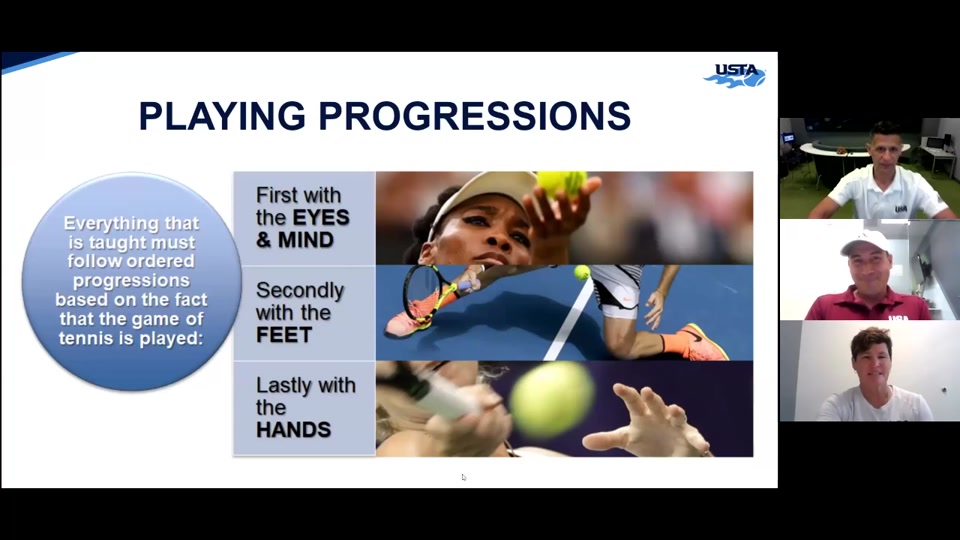
Playing Progressions
Everything tthat is taught must follow ordered progressions based on the fact the game is played: First with the eyes and mind, secondly with the feet and lastly with the hands. Eyes and Mind refers to ball recognition and problem solving. Feet refers to footwork and movement and hands refers to grips and swing paths.
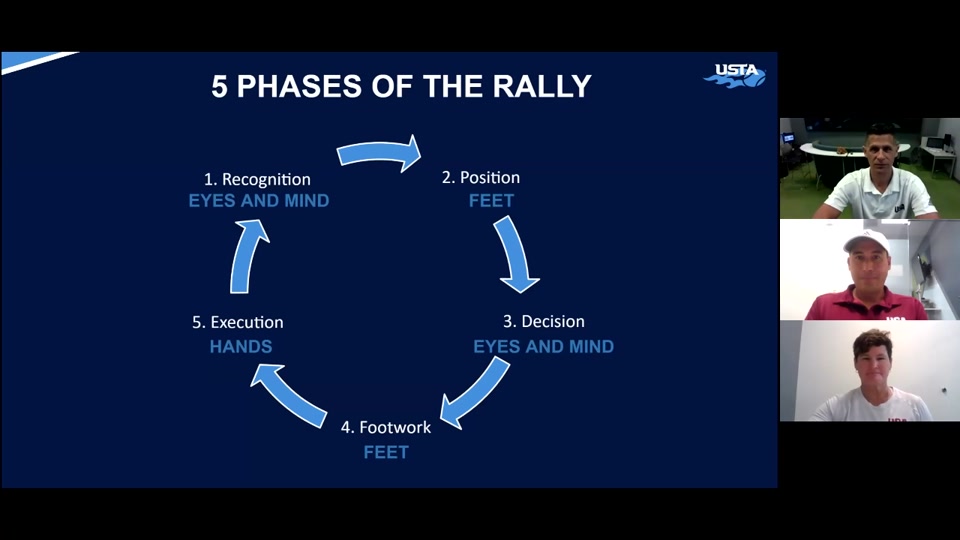
5 Phases of the Rally
In order to further explain how to play one shot ahead it is helpful to understand the 5 Phases of the Rally. Whether a player is serving, returning or within a rally sending or receiving a shot this cycle explains the cycle of phases according to our USTAPD Philosophy.
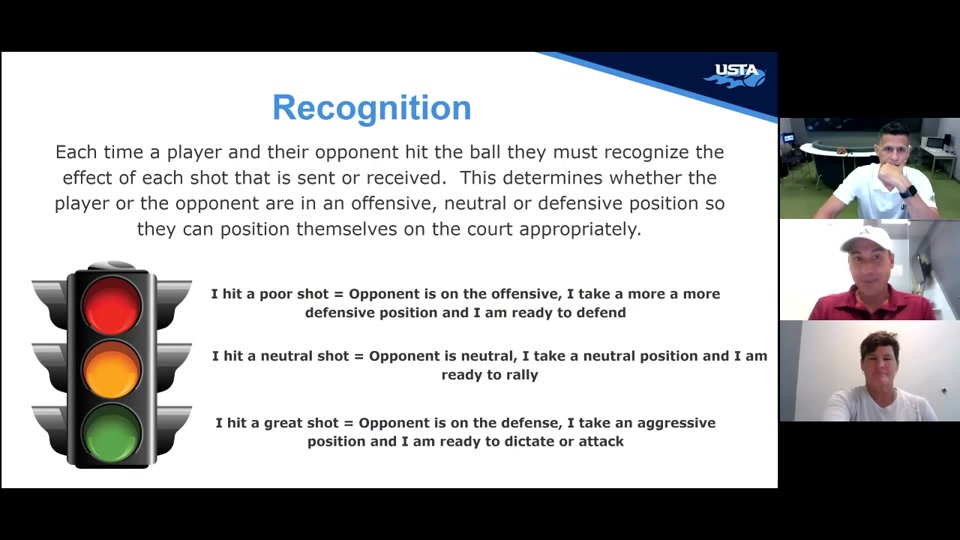
The first phase of the Rally is Recognition
The best players in the world are immediately able to recognize the effect of shots off their racquets as well as their opponent and process the information in order to take the appropriate position on the court and execute the shot in the best position possible. Recognition is a learned ability that is all about processing information in an efficient and effective manner.
Strong recognition is developed through experience. Players gain experience through live ball training which they are able to then put into competitive match play situations. The fundamental skill is truly learned when the player can execute under pressure in a competitive situation. The ability to read the ball of your opponent’s racquet and take the appropriate position with the feet is a mindset that is established through deliberate practice; experiencing and executing the same shot hundreds and thousands of time before. The elite athletes do not have to think about where to take position, their body through muscle memory tells then where to take position. There is no thinking that takes place in the subconscious. This allows the player’s mind to be clear and quite enabling the player to think about the final execution of the shot.
Recognition is not a skill that is just about tracking the ball. Recognition is a complex skill that takes into consideration many different variables: understanding racquet angles, geometry of the court, opponent’s court position vs. your court position, and body position. Players must learn how to read the angle of their opponent’s racquet and be able to make decisions on where to take the appropriate position on the court. It is important for players to be able to decide what kind of shot their opponent is going to play based on their court position and the angles that are open to them based on the geometry of the court. Players can learn to eliminate certain shots their opponents can hit based on their current court position, allowing them to move to a better position of the court to execute in a balanced fashion. How players set up to execute the shot will tell a player a lot about where they are going to hit the ball. It is pretty hard to hit a forehand cross court if your opponent is on the run and they have to step across with the front foot. This should be a good indication to the player that their opponent is going to take the next shot down the line. Understanding how to read your opponent (racquet angle, court position, body position) as well as the ball that you are sending and receiving are skills that can only be learned through playing the sport of tennis.
Strong recognition is developed through experience. Players gain experience through live ball training which they are able to then put into competitive match play situations. The fundamental skill is truly learned when the player can execute under pressure in a competitive situation. The ability to read the ball of your opponent’s racquet and take the appropriate position with the feet is a mindset that is established through deliberate practice; experiencing and executing the same shot hundreds and thousands of time before. The elite athletes do not have to think about where to take position, their body through muscle memory tells then where to take position. There is no thinking that takes place in the subconscious. This allows the player’s mind to be clear and quite enabling the player to think about the final execution of the shot.
Recognition is not a skill that is just about tracking the ball. Recognition is a complex skill that takes into consideration many different variables: understanding racquet angles, geometry of the court, opponent’s court position vs. your court position, and body position. Players must learn how to read the angle of their opponent’s racquet and be able to make decisions on where to take the appropriate position on the court. It is important for players to be able to decide what kind of shot their opponent is going to play based on their court position and the angles that are open to them based on the geometry of the court. Players can learn to eliminate certain shots their opponents can hit based on their current court position, allowing them to move to a better position of the court to execute in a balanced fashion. How players set up to execute the shot will tell a player a lot about where they are going to hit the ball. It is pretty hard to hit a forehand cross court if your opponent is on the run and they have to step across with the front foot. This should be a good indication to the player that their opponent is going to take the next shot down the line. Understanding how to read your opponent (racquet angle, court position, body position) as well as the ball that you are sending and receiving are skills that can only be learned through playing the sport of tennis.
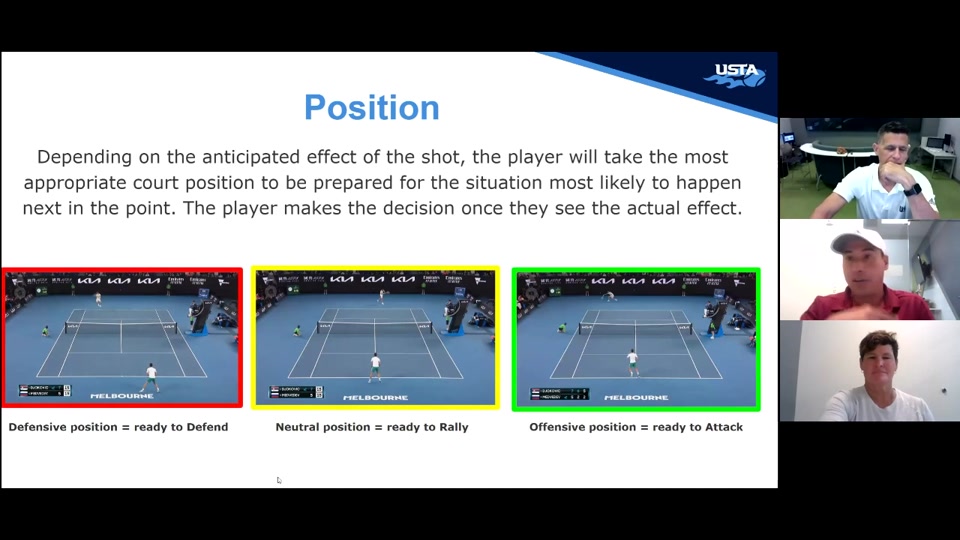
The Second Phase of the Rally is Position
Depending on the anticipated effect of the shot, the player will take the most appropriate court position to be prepared for the situation most likely to happen next in the point. The player makes the decision once they see the actual effect. The defensive, neutral and offensive court positions are specific to each player and can vary as a tactical adjustment based on opponents game style or the surface. Notice that Djokovic is in the air as the opponent makes contact with the ball.
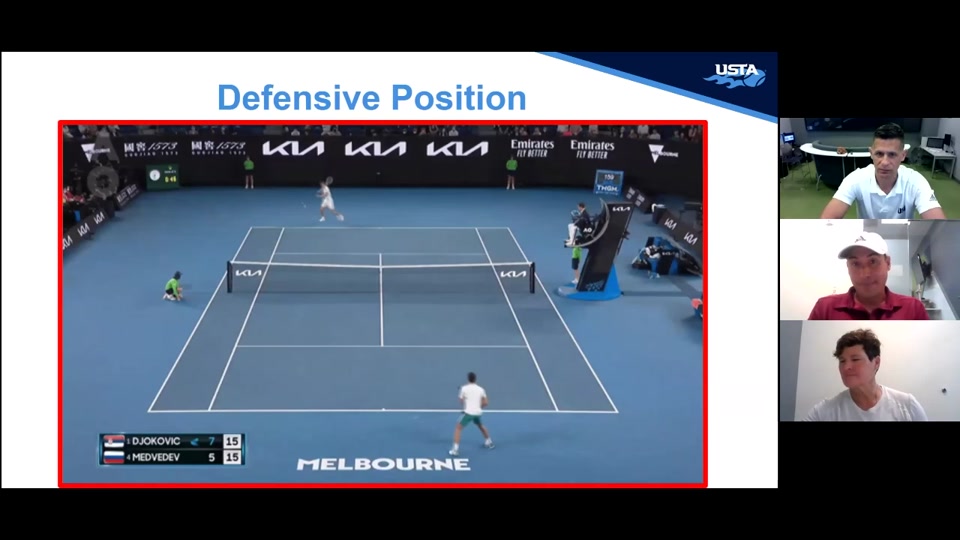
Example of Defensive Position
Djokovic recognizes that his forehand crosscourt is not deep enough and that Medvedev has the opportunity to be aggressive so he takes a diagonal backwards on his recovery (note he splits on the Melbourne) and defends with his backhand slice.
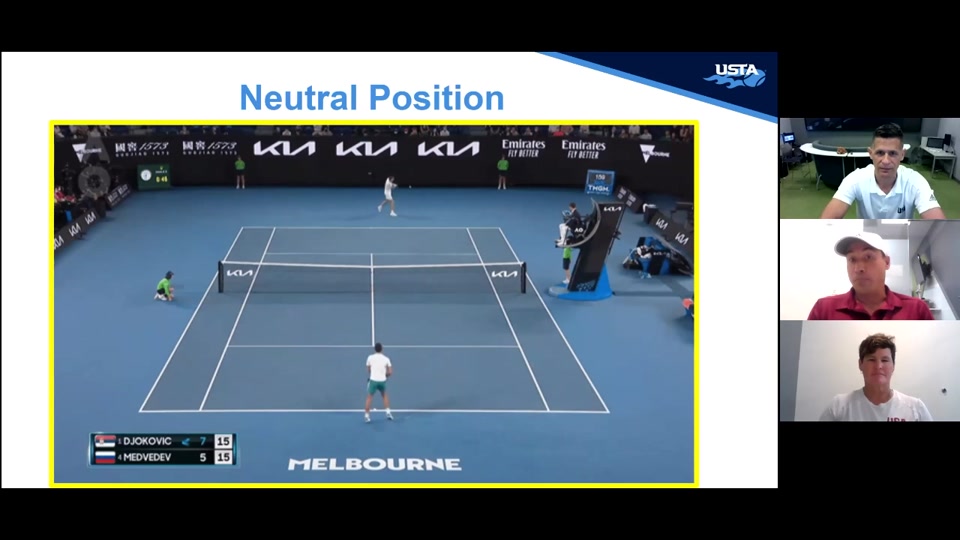
Example of Neutral Position
Djokovic recognizes that his forehand down the line is neutral and recovers to a position just behind the baseline.
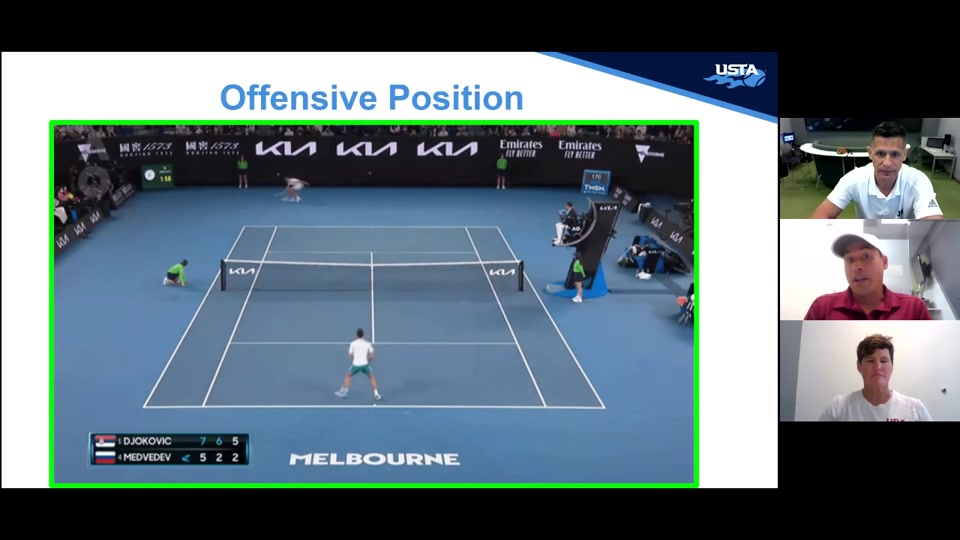
Example of Offensive Position
Djokovic recognizes that his forehand crosscourt has Medvedev on the defensive (he has changed grips to slice his forehand) and splits inside the baseline looking to attack the net and finish the point.
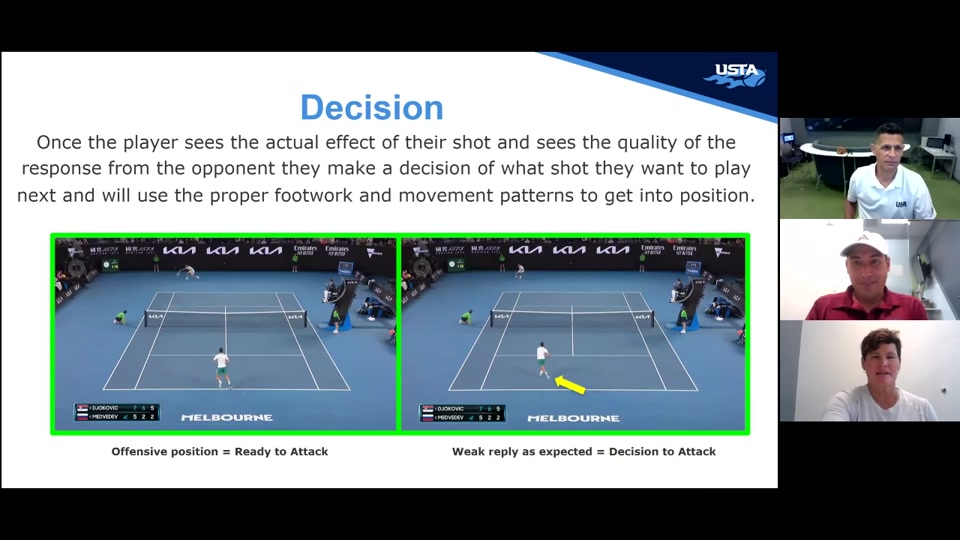
The Third Phase of the Rally is Decision
Once the player sees the actual effect of their shot and sees the quality of the response from the opponent they make a decision of what shot they want to play next and will use the proper footwork and movement patterns to get into position. Sometimes the player takes a position based on the anticipated response and then the opponent produces a shot that is better or worse than expected so the decision phase is critical.
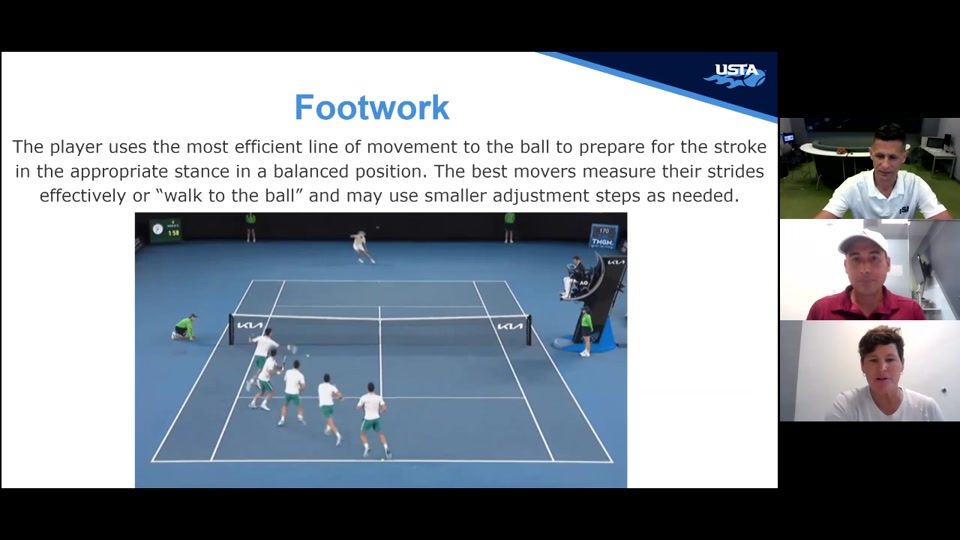
The Fourth Phase of the Rally is Footwork
The player uses the most efficient line of movement to the ball to prepare for the stroke in the appropriate stance in a balanced position. The best movers measure their strides effectively or “walk to the ball” and may use smaller adjustment steps as needed.
For more information on walking to the ball see the link below.
[url="https://dartfi.sh/ST3Perbxcn3" target="_blank"]Walking to the Ball Examples[/url]
[url="https://dartfi.sh/r6wUOdn0xll" target="_blank"]Jose Higueras "Walking to the Ball"[/url]
For more information on walking to the ball see the link below.
[url="https://dartfi.sh/ST3Perbxcn3" target="_blank"]Walking to the Ball Examples[/url]
[url="https://dartfi.sh/r6wUOdn0xll" target="_blank"]Jose Higueras "Walking to the Ball"[/url]
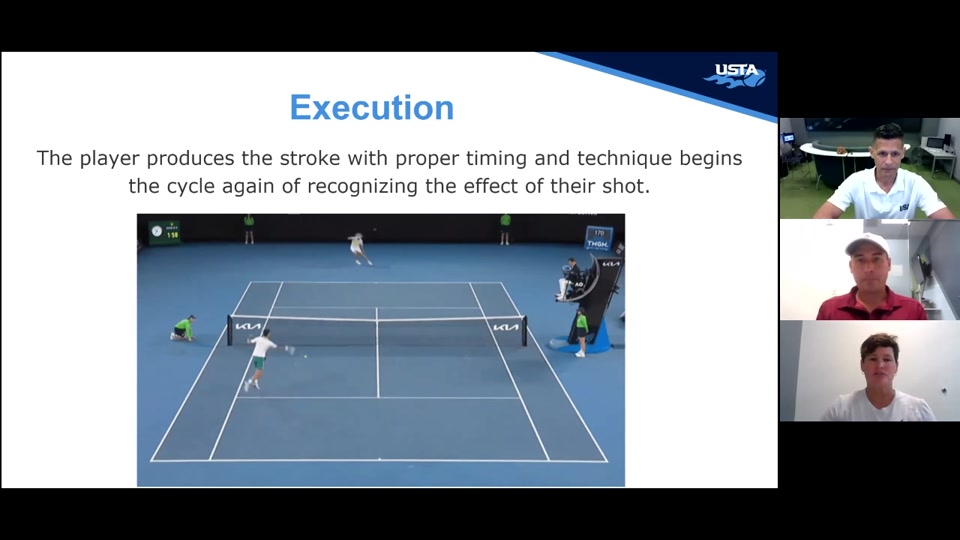
The Fifth Phase of the Rally is Execution
The player produces the stroke with proper timing and technique begins the cycle again of recognizing the effect of their shot.
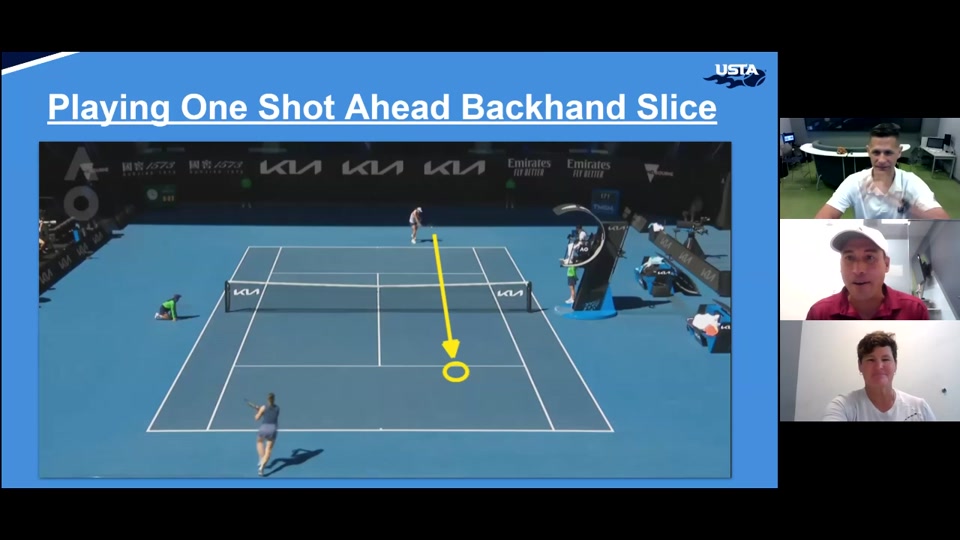
Playing One Shot Ahead Backhand Slice
Two examples of Barty and Dimitrov using the backhand slice to play one shot ahead.
To view these videos again click on the link below:
[url="https://dartfi.sh/hk2ikh3EVhb" target="_blank"]Playing One Shot Ahead With the Slice[/url]
To view these videos again click on the link below:
[url="https://dartfi.sh/hk2ikh3EVhb" target="_blank"]Playing One Shot Ahead With the Slice[/url]

Playing One Shot Ahead Forehand Inside Out to Get a Volley
Two examples of Pegula and Tsitsipas using the forehand inside-out to play one shot ahead.
To view these videos again click on the link below:
[url="https://dartfi.sh/6ZM9ZL11b16" target="_blank"]Playing One Shot Ahead With the Forehand Inside Out to Get a Volley[/url]
To view these videos again click on the link below:
[url="https://dartfi.sh/6ZM9ZL11b16" target="_blank"]Playing One Shot Ahead With the Forehand Inside Out to Get a Volley[/url]
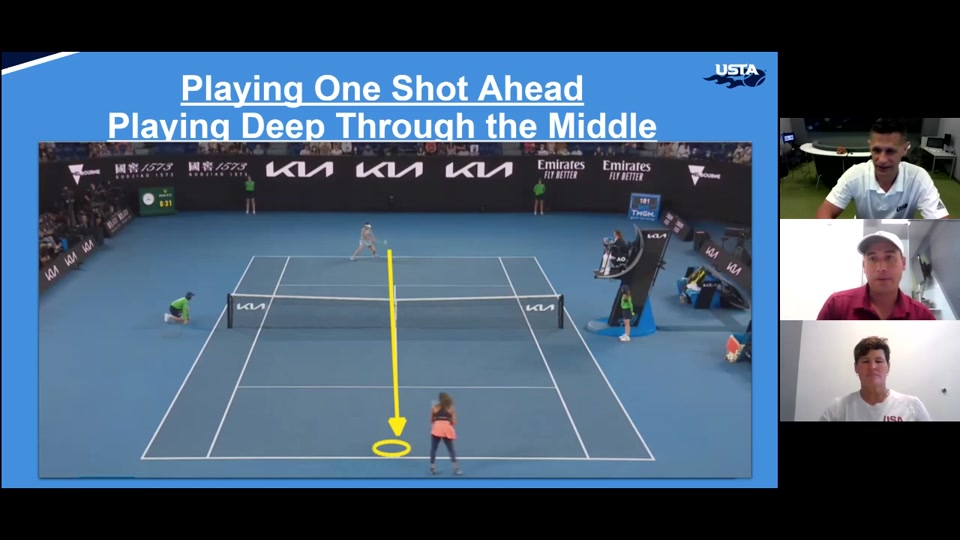
Playing One Shot Ahead Deep Up the Middle
Two examples of Brady and Djokovic Playing Deep Through the Middle to play one shot ahead.
To view these videos again click on the link below:
[url="https://dartfi.sh/bWit1pzfRD4" target="_blank"]Playing One Shot Ahead Deep Up the Middle[/url]
To view these videos again click on the link below:
[url="https://dartfi.sh/bWit1pzfRD4" target="_blank"]Playing One Shot Ahead Deep Up the Middle[/url]
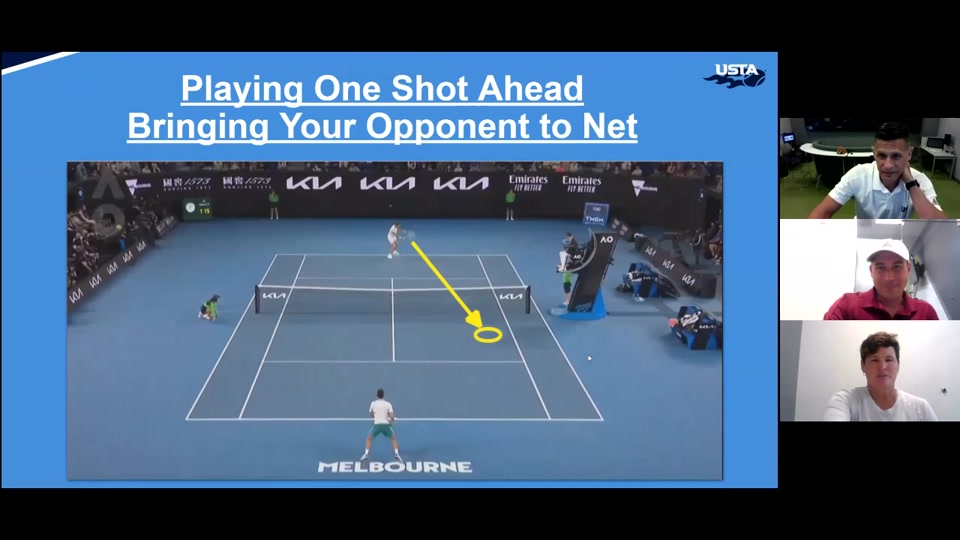
Playing One Shot Ahead Bringing the Opponent to the Net
Two examples of Medvedev and Barty Bringing the Opponent to Net to play one shot ahead and one example of Nadal using the 2 part passing shot.
To view these videos again click on the link below:
[url="https://dartfi.sh/4SH9Iy8QLOc" target="_blank"]Playing One Shot Ahead Bringing the Opponent to the Net[/url]
To view these videos again click on the link below:
[url="https://dartfi.sh/4SH9Iy8QLOc" target="_blank"]Playing One Shot Ahead Bringing the Opponent to the Net[/url]
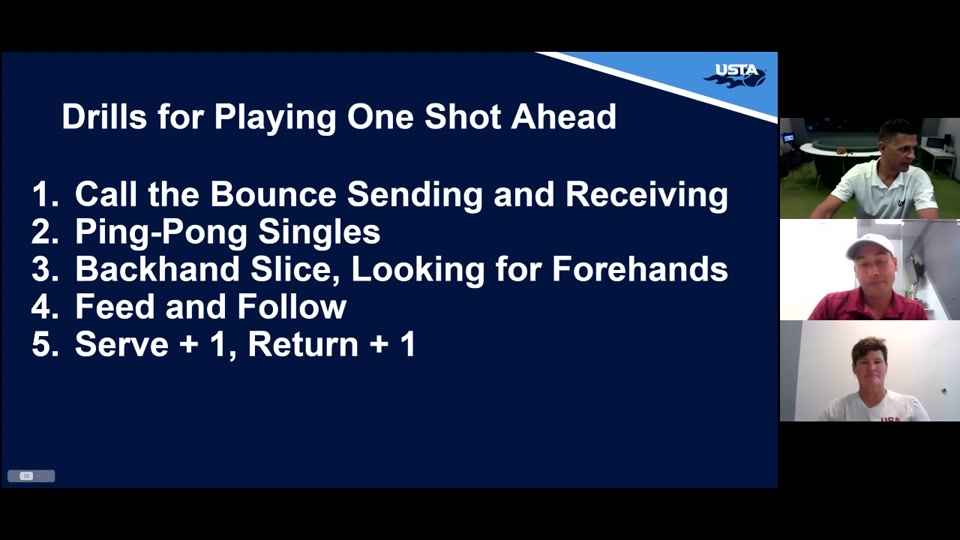
Drills for Playing One Shot Ahead
Lori and Jose discuss their favorite drills for Playing One Shot Ahead.
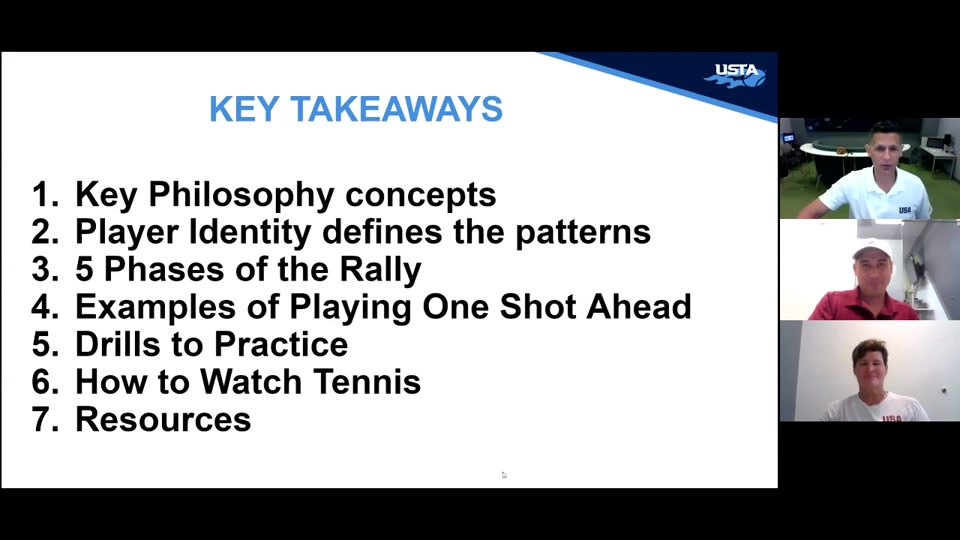
Key Takeaways
Key Philosophy concepts:
Person First and 5 P’s - Patience, Progressions, Parameters, Planning and Goals and Problem Solving
Teaching Hands-Feet- Eyes & Mind and Playing Progressions Eyes & Mind-Feet-Hands
Player Identity - Game style, mentality and strengths and weaknesses define how you play one shot ahead
5 Phases - Recognition, Position, Decision, Footwork, Execution
Examples - Playing one or even 2 shots ahead
Drills and that all drills can be designed to incorporate Playing a Shot Ahead, reward playing a shot ahead even when the point is lost
Watch one player at a time in isolation to seeing playing a shot ahead
See the links embedded in the workbook for resources
Person First and 5 P’s - Patience, Progressions, Parameters, Planning and Goals and Problem Solving
Teaching Hands-Feet- Eyes & Mind and Playing Progressions Eyes & Mind-Feet-Hands
Player Identity - Game style, mentality and strengths and weaknesses define how you play one shot ahead
5 Phases - Recognition, Position, Decision, Footwork, Execution
Examples - Playing one or even 2 shots ahead
Drills and that all drills can be designed to incorporate Playing a Shot Ahead, reward playing a shot ahead even when the point is lost
Watch one player at a time in isolation to seeing playing a shot ahead
See the links embedded in the workbook for resources

USTA
powered by
dartfish.tv
Playing One Shot Ahead
In this presentation for parents and players, National Coaching Staff Lori Riffice, Jose Caballero and David Ramos define and give examples of what playing one shot ahead means, discuss the importance of player identity, and how to design drills and practices to improve on this concept.
Player Name -
Jose Caballero and Lori Riffice
0 - HP Platform Categories -
0 - NOT Upload to Vimeo